When the conscious movement isn't.
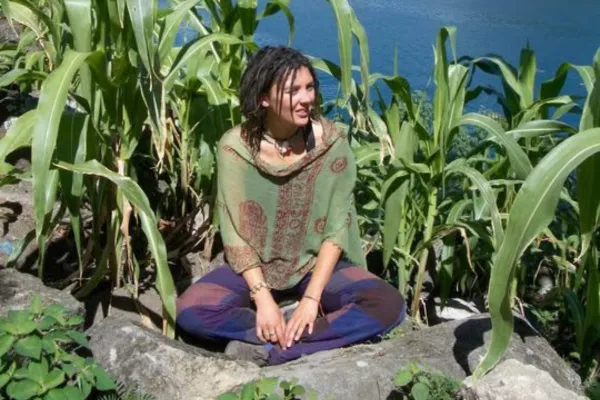
*pic is of me, near San Marcos La Laguna, in the midst of my 20-something seeking, post (first) burnout as a criminal defence lawyer.
I’ve sat in cacao ceremonies and enjoyed them. Mesoamerican practices, held in Western studios, facilitated by Westerners. It was beautiful. And I was also left questioning the cultural appropriation and commodification of practices like this, and whether this is in fact ethically aligned with my values. Truly meaningful experiences within extractive practices. Both simultaneously true.
This is the confronting complexity that gets lost when we blindly call ourselves “conscious” and everything “sacred”.
I’ve always had a strong sense of justice and care, especially for those less privileged than me. I recall being a young child, trying to save lambs from dipping trauma, and repeatedly calling out bullying at school. As a 22-year-old lawyer, diving headfirst into Amnesty volunteering and criminal defence law, felt like the obvious next step, basing myself in indigenous Australian communities and rural Australia. Working from care and supporting a reduction in the privilege divide was non-negotiable.
This combination of justice and care that I feel in my bones makes silence impossible. My current work in psychology and sensitive leadership only amplifies that. It sits in the wellbeing space, where the conscious movement also resides, wrapping itself in the language of spirituality and personal growth. I can’t look away from its shadow. I can’t pretend it’s okay, when I can see the impact on communities I care about. And yes, it’s complex, messy and uncomfortable.
The problem intensifies when communities become hubs for the ‘conscious’. Ubud, Tulum, Pai, and San Marcos La Laguna, to name but a few. All places where locals are being priced out of their own communities, with Western people arriving to find themselves, in places built on someone else’s back.
In my mid-twenties, when I was embarking on my first big overseas adventure, post first burnout, I recall the feeling when arriving in San Marcos La Laguna, Guatemala. Squirmy. Unsettled. A little nauseated. Intermixed with utter awe and beauty. An incredibly stunning place. Interesting people - both local and foreign. But all lakeside land foreign owned or leased while locals were pushed back into the mountain Barrios. More work for locals, yes, but at local rates, serving foreigners living cheaply, and making more per hour than a local’s monthly wage. In my conflict, I stayed and dived in, doing a 3-month training with a woman from Guatemala City. Was it a life-changing training? Absolutely. The transformation within me, the insights and knowledge gained, profound. Did I feel completely aligned? No. Giving back felt essential, but how? At the time, I did the best I could, by getting to know some local families up in the Barrios, learning about their lives, sharing stories, and financially contributing, but it felt a bit tokenistic, given the level of spiritual tourism starting to take hold, that I was a part of. Families with dirt floors, saturated in the wet season, with upturned milk crates for chairs, while foreigners built lakeside sturdy, multi-level accommodation. And that was many years ago. I’m resistant to returning, as I can only imagine just how much that’s expanded.
Ubud is a prime example of transnationalised gentrification meeting spiritual extractivism. This small mountain hub abounds with Westerners living in luxury villas, with local cooks, local cleaners, local guides, all working for a local wage. And the beautifully designed cafes with the $10 matcha and fast WiFi, built so digital nomads never have to feel like they’ve left home, all whilst being waited on by locals, as they post on social media about success, consciousness and connection. Sure, some locals love it - increased work opportunities abound. But how much are the Balinese, as a whole, really being supported? Many have lost homes for commercial development, and there is increased pressure to lease out ancestral, agricultural land to foreigners, replacing generational cultural practice for villas, retreat centres and organic cafes. The over-population of the island from the Western influx is making waste-management a huge problem. I’m reading articles from locals begging foreigners to choose different destinations because of this.
While visiting friends in Peru, I felt so uncomfortable with the takeover of communities in the Sacred Valley, by seekers of plant medicine awakenings. I witnessed an ancient cultural practice being repeatedly morphed into a money-making tourism highlight. Locals I spoke to were challenged by this - both Westerners and locals commercialising deep and sacred practices for personal gain. Yes, not everyone is doing this, but it’s rife.
Pai, Thailand, a beautiful, culturally rich area, home to neighbouring indigenous tribes, has become a centre for “the conscious”. Breathwork, ‘shamanic’ ceremonies, yoga and healing retreats abound. Foreigners rent low-cost land, and open wellness cafes while local staff work for a fraction of a Westerner’s income. The underground illegal economy has grown exponentially. Drug tourism is rampant, and the huge influx of wealthy Westerners has seen a rise in the sex trade among the vulnerable, including adult and child refugees fleeing the conflict in neighbouring Myanmar.
My Mexican friends avoid Tulum because of the white linen-clad, ecstatic dance explosion, coupled with the rise of fancy Westernised working cafes, that are pushing Mexican culture and affordable housing to the background.
This kind of ‘spiritually awakened consciousness’ is gentrification with a consciousness veneer.
Real awakening turns toward social justice and care - toward who carries the cost of my becoming.
Every genuine spiritual tradition, from indigenous practices to the world’s religions, shares one thing at the very core: community care. Self-optimisation and enhancing personal frequency are not the focus. Connection and care for the collective wellbeing is. This includes those more vulnerable. Those without the privilege of travel.
That’s the real, gritty, inconvenient spiritual work. It isn’t just inner processes. It never was.
So what do we do? Where does our responsibility lie?
Being honest is a good starting point. Honest about the impact our presence in these hubs has. Honest about our contribution, or lack thereof. And starting to have the difficult conversations that recognise our part, dropping out of the ego and realising it is not “more conscious” to dance ecstatically, drink cacao or meditate on a mountain lake, as nourishing as these activities may be. Don’t get me wrong, I love doing these things, but true consciousness involves deep care.
When we are living and breathing on land we are not the original stewards of, that care involves action. Action that is community-driven. Action that truly supports those whose ancestral lands we walk upon. Action that reduces the equity and equality divides.
When we are utilising rituals and practices from other cultures, that care requires deep discussion, permission and collaboration with those who are the original wisdom keepers of these traditions.
Without such things, we are simply taking and calling it ‘sacred’.